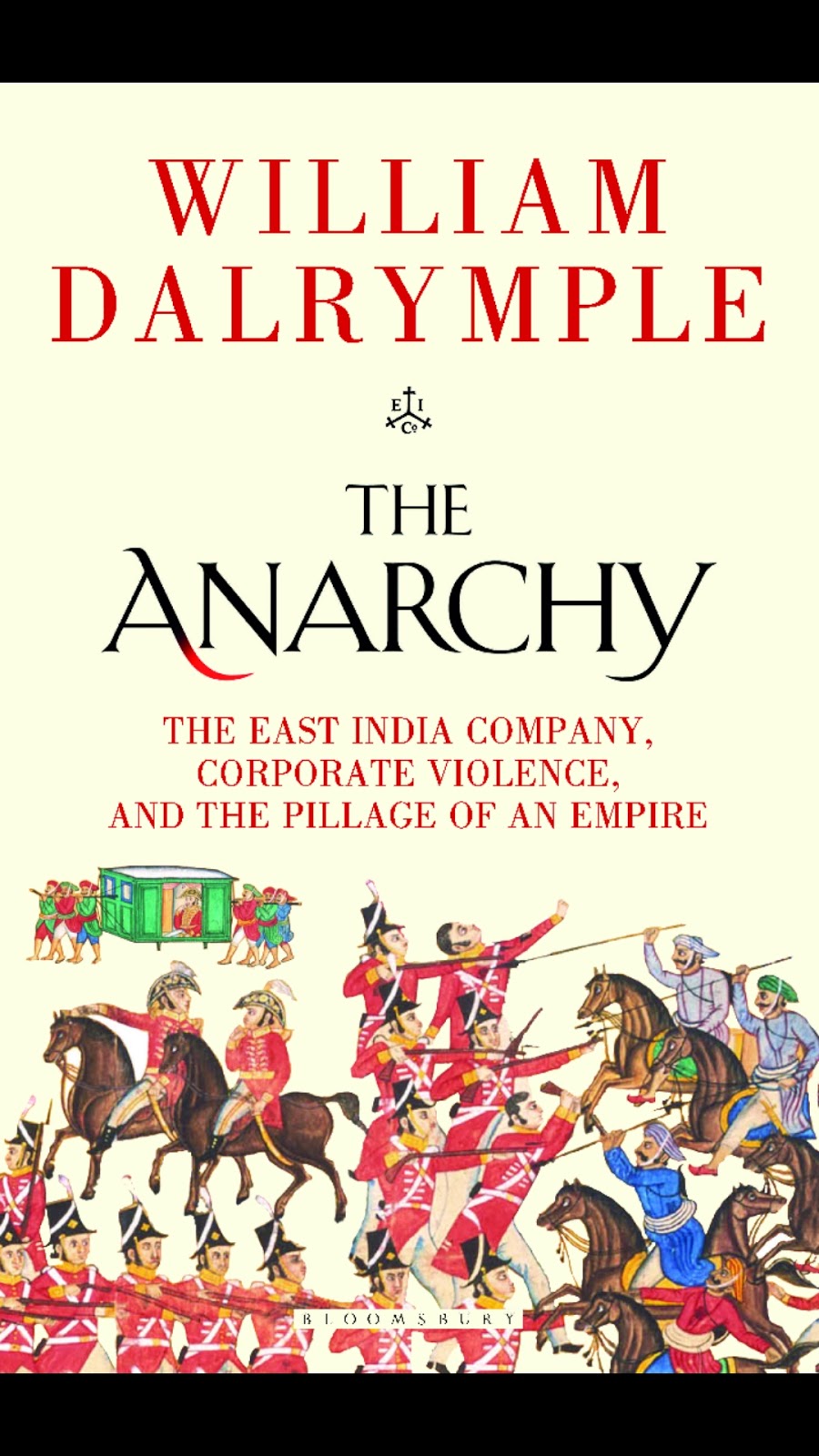
‘History is boring’ is a common refrain from students in schools. And one obvious reason is the history books have generally been written by the historians who are skilled in historiography but are unable to connect with the common reader. Very few historians have the ability to build engaging narratives in their books. And William Dalrymple is one of them.
Dalrymple is known today as a leading expert of Indian colonialism in the world. As a historian he knows his job well and he does it too; diligently, effectively. Before taking up the task of writing Dalrymple carries out extensive research analysing diverse sources. Then he weaves the stories of history in such a way that you find his books unputdownable. With every new book that he writes, his canvas widens and the skill of writing matures.
Dalrymple’s The Anarchy is the latest in a series of three books that he has written on the history of the transition of the Mughal rule to the British in India. The other two are The White Mughal and The Last Mughal.
In The While Mughal Dalrymple focuses on the influence of the Mughal culture on the British officers in the initial period of the British Raj. He has presented the case of an officer posted at Hyderabad to reveal this. The Last Mughal is the story of the 1857 revolt in India with Bahadur Shah Zaffar as a key character. These two books seek to portray the political, cultural and societal aspects of colonial India.
The Anarchy, however, is the most prophetic of all. It relates the story of how a trading company, that is East India Company, started ruling over India in 18th century. How it first captured a rich state like Bengal and then consolidated and spread its rule through the whole of the country.
The book reveals the manner in which EIC used all the means at its command to carry out ‘loot’ in India. The company had been authorised by the British government to have a private army and to wage a war if it was required to fulfil its aim. ‘Its lawyers and MP shareholders slowly and subtly worked to influence and subvert the legislation of Parliament’ through what is known today as corporate lobbying.
In the Epilogue Dalrymple makes an interesting comparison between the nature of EIC with that of giant companies in the world today. He also uses this comparison to reveal the sinister policies of these companies — साम, दाम, दंड, भेद — which they employ to maintain their monopoly in the markets.
©arunjee
 Arupedia
Dear Sir,
Wonderful review.
I really enjoyed reading your review and depth of your understanding of History, Literature and culture.
I am also interested in exploring History especially Mughal Period and also Later Budha Period.
LikeLiked by 1 person
Thank you so much for the response.
LikeLike
Thank you.
LikeLike