Pottery on the fringe

Most students living in the school hostels would go home during the Diwali holidays. But it was customary for the small group that stayed back to visit the house of Nazeeb Khan, a potter in village Gilpatti near Bathinda, Punjab. The purpose was not just to buy earthen diyas, but also to behold the process of making the age-old source of light. 

A group of twelve students and three teachers set out on a short expedition on foot on 11th November 2014, the day of Diwali. Early morning they walked for two kilometers to meet Nazeeb, who received them warmly outside the village and escorted them to his house. In the past it was inconceivable that a potter would be free from work on a Diwali day. Nazeeb and his family members would start making diyas several weeks before in those days. Still they could not fulfill the demand of the customers.  Things are different now. Very few people are interested in earthen diyas these days. 

Nazeeb Khan giving shape to a diya. Photo credit: arun jee

There was excitement among the students. They had come to observe Nazeeb making diyas and also to try their hand at pottery. It may appear to be simple, but a small diya has to go through various complex processes — selecting the appropriate clay for kneading, giving shape on the running chak to baking — before it reaches the hands of its user. Nazeeb is adept at these skills. He did not go to a school to acquire this art. It has come to him naturally by watching his elders. The students enjoyed watching Nazeeb’s fingers negotiating with clay dough on the moving chak. They were awed by the way he was able to mould the clay into the shape and size of his choice with a certain fluidity in his movements. Some of them even tried their hand at this creative process, but in vain. Little did they realise that what they were trying to do in one attempt has taken years for Nazeeb to master.

Nazeeb’s ancestors were potters who had come to Gilpatti some 300 hundred years back in search of livelihood. Since then the coming generations have been engaged in this profession. The difference between then and now is that pottery was the only source of income for his ancestors, but for Nazeeb and his generation it is just a part time job.

Fifty years ago when the majority of people still used earthen pots and utensils for their daily use, the potters were in great demand. They had to work constantly to meet the requirements of the community in the village. The times have changed now. The earthenware have now been replaced by the metal ones in every household, those of steel the most common. These pots (earthen) have just remained the works of art which may fetch higher prices in some high end markets, if recognized by the connoisseurs. But it is no longer a regular source of income for them. Nazeeb and his community wait anxiously for the season of Deepawali when he and his family would make use of their skill to earn as much as possible. In the remaining part of the year Nazeeb earns his livelihood as a barber. His elder brother, Anwar, works as a conductor in a bus. His uncle drives a horse cart.

The descendants of Nazeeb’s great great grandfather have expanded and have branched out. Most of these families live in close proximity with one another in a kind of ghetto but pottery isn’t a full time profession for any. Just as they live on the northern end of the village, their art and profession of pottery is also on the fringe.

©arun jee


Teaching Justice

File:Iustitia van Heemskerck.png
Courtesy: Wikimedia commons

Justice is no less challenging to teach in the classroom.

An interesting way to begin is to have a role play of the dialogue that Socrates had had with a group of young people on Justice. They ask him, Why should we be just when people who tell lies, twist rules, avoid paying taxes are more successful than those who are just? Socrates replies that if everyone violates rules and becomes unjust, then no-one would remain secured in the society. He explains further that it is in the long-term interest of everyone to follow the rules of Justice.

This conversation between Socrates and the young people must have taken place 2500 years. But their question and his answer for Justice remain valid even today.

Justice is to deliver to each citizen his due. Due and deliver are the key words here. What is due to the citizens from a state should be clearly defined. It should be known to one and all. And it is for this purpose that a constitution is framed by a state. The constitution is meant to spell out the dues/rights of the citizens. However mere granting of the rights is not enough. An efficient system is required to deliver these rights to the citizens.

In the ancient days when monarchy was in vogue there were several kings known for their efficient delivery system of justice. But the rights of the people were limited. In the modern times when political systems are more oriented towards the people, rights of the people have increased and so have the scope for justice.

I have heard some elderly people saying that the British system of justice was better for India. Probably they mean that their system of delivering justice was more efficient. But they tend to forget that the rights of the citizens were limited at that time.

©arun jee, 11.11.20

Teaching Equality

Thumbnail for version as of 23:00, 15 February 2009
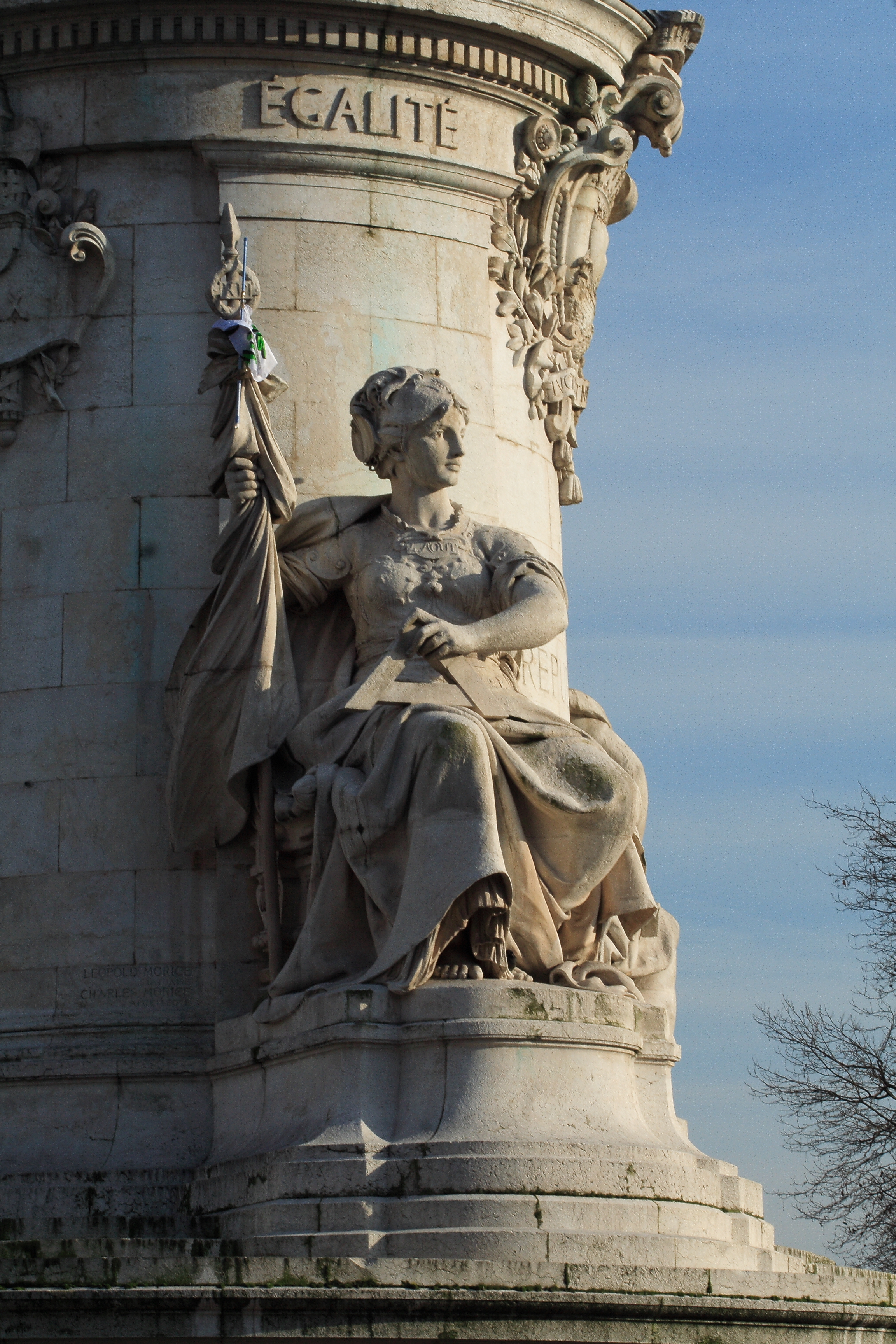
EGALITE
Wikimedia Commons, Coyau, 15 February 2009

Equality as a concept appears simple, but teaching it in the classroom may be as challenging. One may begin by asking the students to make a list of inequalities they perceive at home, school or in the society. These inequalities based on sex, income, caste etc can then be discussed one by one with sensitivity and care.

Complete equality is a myth, like complete freedom. A state may grant it to all its citizens by a rule of law but the society or economy may become the stumbling blocks. Political, social and economic equality are all interdependent. To achieve one without the other is very difficult.

The story of George Orwell’s Animal Farm is a classic fictional story to let the students understand how difficult it may become to establish Equality. In the story the animals of a farm revolt against its owner and establish their own rule. Their primary aim is to practise equality in the farm. They write the slogan, ‘All are Equal’, at every nook and corner of the farm. They are very happy. However their happiness turns is short-lived as the theory of equality is not being practised in the farm. Even the slogan is changed. It becomes “All are equal but some are more equal than others”. I had given one copy of Animal Farm to each student for their extended study.

The students can then be given the case studies of two states, one a communist and the other a democracy, to evaluate the status of equality in each. USSR is a classic case for communism.
It was a state whose entire edifice was based on equality and it crumbled. The examples of democracies can be many but it is advisable to avoid one’s own country. It is always good to begin with the study of a different country. The insights acquired can help understand one’s own country better.

Equality and Freedom are like two estranged sisters. A parent like Democracy finds it difficult to maintain a balance between the two. Very often one grows at the cost of another.

©arun jee, 6.11.20

Teaching Freedom

Courtesy: Wikimedia foundation, Creative commons attribution, Toby Hudson

Teaching an abstract idea is always daunting in a classroom. I have experienced this year after year. Two years back something similar happened when I took the assignment to teach Political theory to the students of Grade XI. The topic was Freedom.

My first question in the classroom was What is freedom? And the students were tongue-tied. The expression on their faces said — if not asked, I know; but if asked, I know not.

In order to break the ice, I turned to a few questions related to their life. Do they have complete freedom at home to eat whenever they like? And if not, then what restricts that freedom. The answers were the availability of the foods or the schedules of time etc. Similarly I asked if they have the freedom to do what they like in the school. Could they move around the corridors, playgrounds according to their choice? If not, then why not?

Soon the concept of freedom started sinking in their minds. The ice had been broken. We then started discussing how absolute freedom is a myth, what were the restrictions on freedom and why some of these were necessary.

Interestingly many grey areas emerged for intense debate. The students got polarised on topics like the freedom of choosing the subjects for study or the parents’ role in limiting such choices. We also discussed various types of restrictions put by family, friends, society, nation etc.

The discussion got intense when the question came to the freedom of the boys and girls in choosing their partners, particularly in an Indian setting. We discussed how the degree of this freedom is increasing and the so called ‘love-marriages’ are not so uncommon these days. By now the students had become partners in learning of this concept called Freedom.

My own horizon broadened while exploring the concept in books like Nelson Mandela’s Long Walk to Freedom and John Stuart Mill’s Autobiography.

In the following days I had to teach the concepts like Equality, Social Justice which were as abstract and challenging.

©arun jee, 29.10.20

Security Council at 75

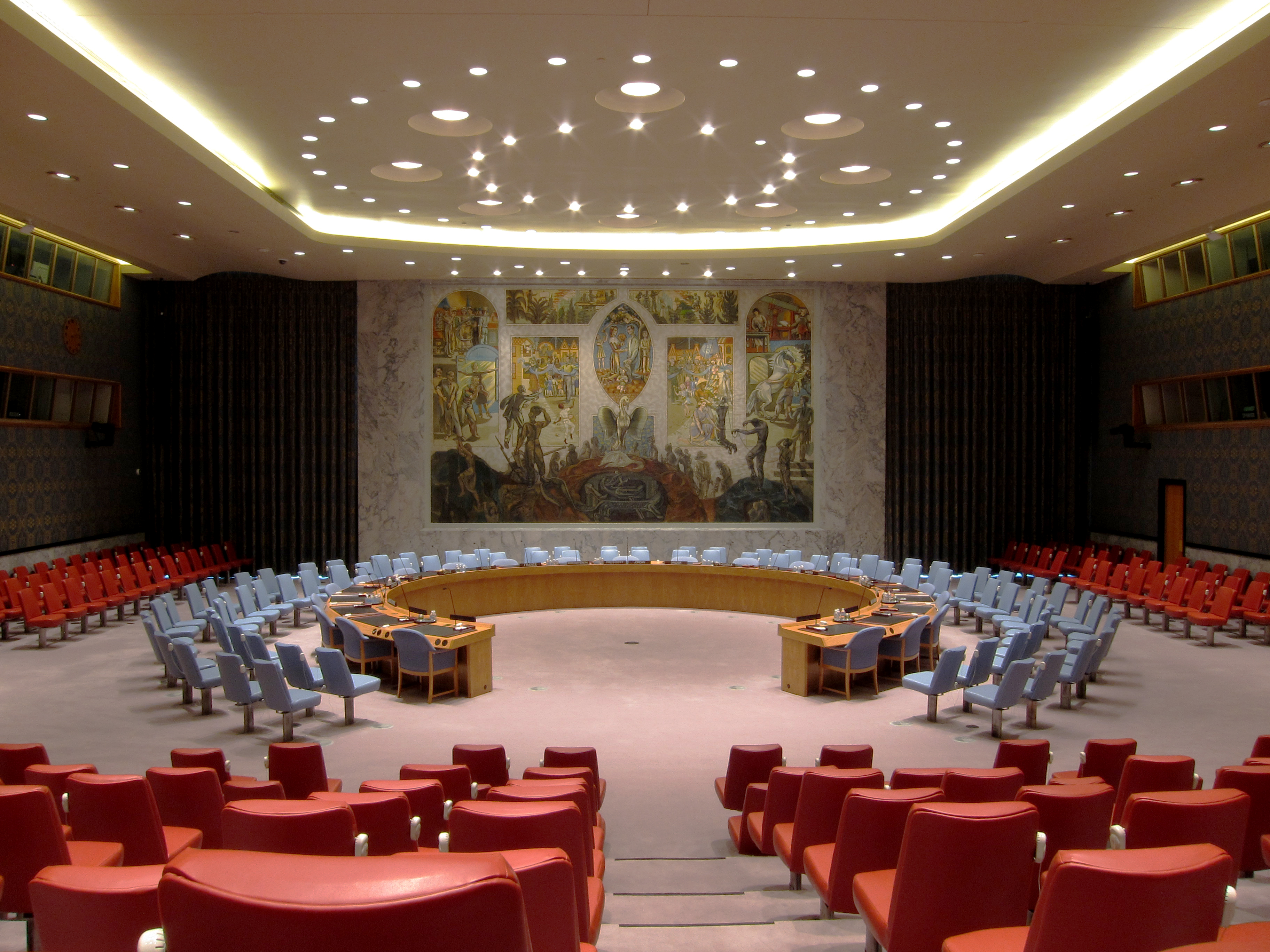
File:UN-Sicherheitsrat - UN Security Council - New York City - 2014 01 06.jpgThe UN Security Council Chamber at New York
Courtesy: Wikimedia Foundation, creative commons attribution, Neptuul

Security Council is the most powerful UN body with 5 permanent members and 10 non-permanent members who are elected from different regions after every two years. And we all know that it is the permanent members who call the shots with the power of veto.

Various attempts have been made to reform the Security Council in the past. The aim has been to make it a representative body that fulfills the aspirations of the member states and is able to work towards a democratic, peaceful and a just world order. But they all have failed.

In accordance with the goals of the UN, Security Council is expected to be a democratic body. But for that the veto power should be taken away from the permanent members. This seems most unlikely. But in case it becomes possible, then what would be scenario?

These five members, (US, China, France, Russia and UK) which are the most powerful states in the world, will start pulling the strings from outside the council. This might create problems of a new kind. It’s a catch 22 situation.

Now when the UN is celebrating 75 years of its existence, could we expect a global push for the reforms in the Security Council? Could we see the movement of even a small step towards a balance of powers in the council? The chances are very remote.

©arun jee

The need of logical thinking in schools

There was a time when there were no books. #Knowledge and #skills were transferred orally from generation to generation. You didn’t need to verify and examine knowledge so much. You just had to accept what your elders had told you. The jobs and professions were limited.

Then came the print industry and along with them, #books. Information, knowledge could be distributed to a larger audience then. In fact people having access to books could acquire knowledge easily.

Now is the time when information and knowledge are in abundance. But so is the misinformation. While searching for information you might get misinformation if you don’t know how to distinguish between the two. You should have the skill to understand the difference between what is reliable and what is not, what is fact and what is fiction. One can do that only when one has acquired the skill of logical thinking.

Logical thinking should be introduced at an early age, in the #schools.

Courtesy: Madan Mohan Pant M mpant
#logicalthinking#criticalthinking#fakenews#information#misinformation

A voyage to Sea of Poppies

File:Ghosh amitav Sea of Poppies.jpg

My week-long voyage to Sea of Poppies by Amitav Ghosh was full of excitement,adventure, learning and joy. Set in the historical backdrop of mid-nineteenth century the novel’s canvas is as wide as an ocean, carrying in its womb multitudes of stories, characters, themes, locations, languages…… yet remaining placid, cool and calm.


I became interested in the book after reading a reference to the opium factories in Gazipur and Patna in one of book’s reviews. I already knew that the main building of Patna College, much before the college was started in 1863, had been used as an opium factory earlier. 
This led me to embark on the journey of Sea of Poppies with the expectation to sail through the history, language and culture of the places, I thought, were known to me. Flipping through the pages of the book was an exhilarating experience. I got an opportunity to observe the places like Patna, Bakhtiarpur, Monghyr, Teghra, Barauni or objects like Barh ka Lai etc through the prism of a master story teller like Amitav Ghosh. 


However these are only a few of the many items available on the plate of the novel. Just as the white Ganga merges with the Hoogly and finally disappears in the Black Water of the Ocean at Gangasagar, the story  continues through the regions of Bhojpur, Bengal, India, China, England, Europe(the list is long); creating in its wake the conflicts of culture, language, politics and economics, evoking in the reader sympathy, love, hate, humour and nostalgia for a bygone era. 
Reading the novel is like having a smooth sail in a dinghy over the surface of a deep sea. 


By the way what happened to Jodu, Kalua, Serang Ali, Neel and Ah Fatt after they escaped in the lifeboat and what was in store for the rest of the characters on the ship named Ibis? I must find out in the next novel of Amitav Ghosh, River of Smoke. My next voyage has already begun. 

©arun jee

photo credit: Wikimedia commons

How to improve Reading

Thumbnail for version as of 18:02, 8 March 2009

Read, read and read. Read a newspaper, magazine, editorial, stories, novels if you want to enhance your skill of reading. This was the advice we used to get from our elders. And by and large it was correct.

However if you want to achieve a certain level as a reader within a limited time, then you have to follow a systematic path. The following few tips can help:

First you need to identify what is your level of reading. Reading materials are selected and graded into various levels from easy to difficult. A lot of these materials are available online, free of cost. They can also be purchased from the market. All school textbooks for a language are graded class wise. It’s a different thing that in the same class there may be students of different levels.

But how to identify one’s level? For that one has to pick up the text of a particular level. If there is no difficulty in understanding the text at all, then it’s easier. Move to the next level of difficulty. Similarly if you find that most of the words, phrases or sentences are difficult to understand, then it is a difficult one. Go one level down. Probably the 60/40 rule should apply. If you understand 60 percent of the text and face the challenge of understanding 40 percent, then the level is suitable for you.

The second mantra for reading is variety. You need to read a variety of texts from science, humanities, commerce to sports, markets and more. If you read texts of only one field, then you remain deprived of the vacabulary and sentence structures of other fields. Initially one may find it difficult to enter the unfamiliar terrains. But one should keep on trying to expand one’s interests.

The third is read regularly. You should be able to devote some time to reading every day. Here comes developing your interest in literature handy. Keep the variety of texts in mind but also develop a habit of reading for pleasure. You will not get bored.

©arun jee

Photo credit: Charles Dana Gibson, Wikimedia Commons

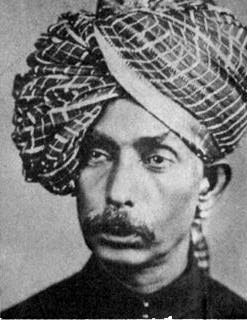
Ustad Abdul Karim Khan

Ustad Abdul Karim Khan was one of the legendary singers of Hindustani classical music in India. He was the founder of the famous Kirana Gharana in the traditions of Hindustani classical music. Apart from his immense contribution to music, he represents the cultural unity and diversity of what we know today as India.

He was from Kiryana in UP from where he moved to Baroda in Gujarat. He spent some time as a court singer in the court of Maharaja Sayaji Rao where he fell in love with Tarabai Mane, a member of the royal family of Baroda. After marriage they moved from Baroda to Bombay where the couple lived with their two sons and three daughters. Abdul Karim Khan, however, moved further south to Maharashtra and Karnataka after their separation in 1923. 

The life of Abdul Karim khan is like an open book. He kept on moving from UP to Gujarat, Maharashtra, Karnataka and other places, performing as well as enriching his style with anything worth that came his way. It is no surprise then that a maestro of Hindustani classical music like him did not hesitate in adopting the features of Carnatic music in his gayaki. He was very open as a teacher too. He prepared a good number of disciples.

One may not be aware that some of the great singers of Kirana Gharana like Sureshbabu Mane, Hirabai Badodekar and Sarashwati Mane were his children from his wife Tarabai. Before the couple got separated, Sureshbabu Mane was named as Abdul Rahman, Hirabai was Champakali and Sarashwati was Sakina. After the separation Tarabai changed those names to what they are known today. Sureshbabu was the guru of another legendary singer, Dr Prabha Atre.

When Bharat Ratna Bhimsen Joshi ran away from home to learn classical music, his source of inspiration was Ustad Abdul Karim Khan. Bhimsen Joshi  learned under the wings of a disciple of Ustad Abdul Karim Khan named Pandit Sawai Gandharv who was another milestone of the Gharana.

Fortunately Abdul Karim khan was born in a period when the recording of music had just started in India, in 1902. More than 30 of his songs were recorded, many of which are still available for listeners. I enjoy listening to some of his songs that I have.

One of them, Jamuna ke teer, is a treat. When you listen to the same song from his disciple, Sawai Gandharwa as well as from his grand disciple, Bharat Ratna Bhimsen Joshi, you understand the individual differences between these great gurus. The basic structure of the song remains the same but the distinct style of each can be felt.